Sespe Hot Springs: A Complete Guide to California's Most Remote Wilderness Soak
- September 30, 2026
Photo by Elena Cruz via Pexels
The first thing you should know about Sespe Hot Springs is that getting there requires commitment. Not the casual drive-up kind, but the kind that involves strapping a pack to your back, crossing a river multiple times, and walking until your legs remember why they exist. The reward is a cluster of natural hot springs with water reaching 102°F, pooled against the banks of Sespe Creek in one of California's most isolated wilderness areas. No roads. No crowds. No guarantees except steam rising from the ground and the sound of water moving over stones.
This is the Sespe Wilderness, a 149,000-acre expanse of chaparral-covered mountains, deep canyons, and the kind of silence that makes you aware of your own breathing. Getting here takes planning, permits, and physical effort. The article you're reading now covers everything else: the trail, the logistics, the wildlife, the geology, and what to expect when you finally arrive.
The trail to Sespe Hot Springs
The journey begins at Piedra Blanca Trailhead, located in the northern portion of Los Padres National Forest roughly 30 miles east of Ojai, California. From this trailhead, the route to Sespe Hot Springs spans approximately 8.5 miles one way, making for a 17-mile round-trip commitment that most backpackers split across two or three days.
The trail descends steadily from the trailhead into the Sespe Creek drainage, dropping roughly 1,400 feet in elevation over the first several miles before the terrain flattens and follows the creek northward into the heart of the wilderness. This initial descent is deceptively gentle. The trail appears benign in sections, winding through oak woodland and dried creek beds, but the cumulative miles add weight to every step, and the return trip's climbing demands a fitness level that casual hikers sometimes underestimate.
Trail conditions vary significantly with the season. Summer temperatures in the canyon can exceed 100°F, transforming what is already a dry, exposed corridor into a heat trap that makes the midday hours dangerous for inexperienced hikers. Spring and fall present more forgiving conditions, with daytime highs in the 60s and 70s, though nights can dip below freezing in the shoulder seasons. Winter access depends on recent rainfall. Trailhead gates may close after storms, and creek crossings become genuinely hazardous when water levels rise.
The most distinctive feature of the final miles approaching the hot springs is the creek itself. The trail alternates between climbing above the water and dropping down to the riverbank, requiring multiple crossings of Sespe Creek. During low-flow periods in late summer and early fall, these crossings involve stepping stones and careful footwork across exposed gravel bars. In spring, snowmelt from the nearby Topatopa Mountains swells the creek significantly, sometimes making crossings impassable or requiring full wades. Hikers should carry footwear suitable for wet crossings and assess conditions at each pass rather than assuming previous travelers found safe routes.
The hot springs: What to expect
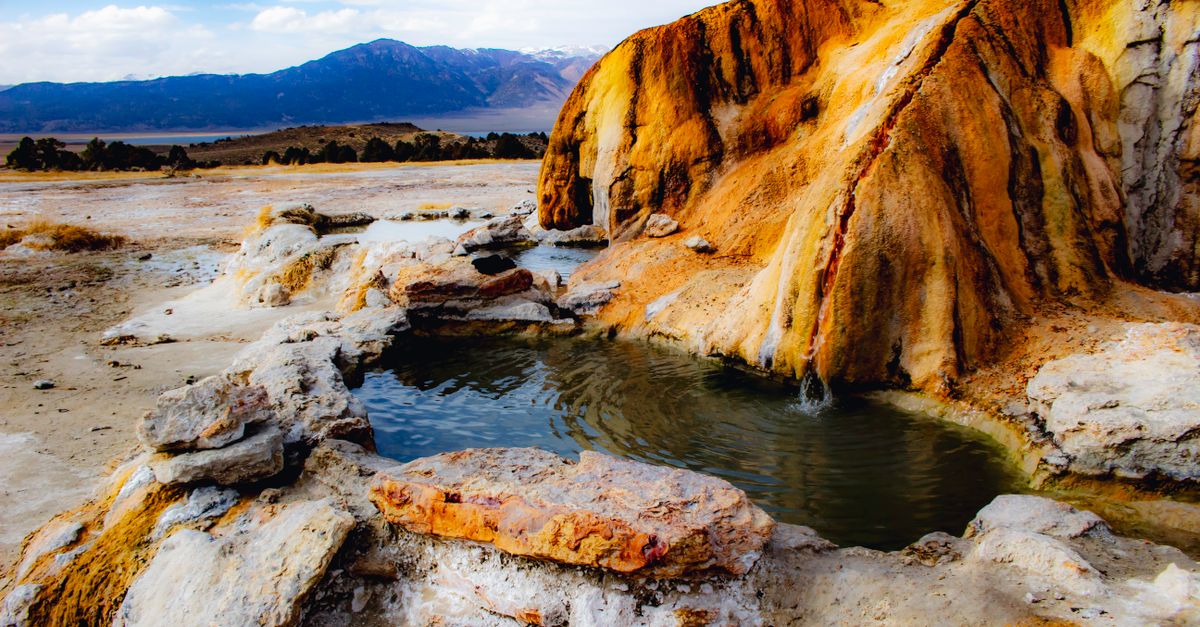
Sespe Hot Springs emerges from fractured sandstone formations along the eastern bank of Sespe Creek, approximately 200 yards upstream from where a major tributary joins the main creek channel. The thermal water surfaces at temperatures reaching 102°F before mixing with the creek's cold flow, creating a range of pools that vary in temperature depending on their distance from the spring source and their proximity to the main river current.
The largest and most established pool sits closest to the emergence point. It is roughly 10 feet in diameter and has been carved and lined with stones by decades of previous visitors. This pool tends to run on the hotter end of the range, often between 98°F and 102°F, and receives direct sunlight for much of the afternoon. A series of smaller, shallower pools spreads downstream along the creek bank. These are cooler as they dilute into the river's flow and shaded by willows and cottonwoods that fringe the water's edge.
The setting is what makes the experience. The springs occupy a narrow canyon section where the creek bends against a sandstone cliff face, creating a natural amphitheater of rock and water. Condors frequently soar overhead on the thermal currents that rise from the canyon. California condors are among the rarest birds in North America. The sound of the creek fills the space between soaking sessions, mixing with birdsong and the rustle of wind through the riparian vegetation.
Unlike developed hot spring sites, there are no facilities here. No changing rooms, no maintained trails to the pools, no signs indicating where to go. Visitors must practice leave-no-trace principles rigorously, carrying all waste out and keeping the site clean for those who follow. The US Forest Service does not provide trash service in the wilderness. What you carry in, you carry out.
Permits and regulations
Accessing Sespe Hot Springs requires a free wilderness permit from the Ojai Ranger Station of Los Padres National Forest. These permits are self-issued at the trailhead, a small registration box where hikers fill out their information before beginning the hike, but the station recommends obtaining permits in person at their office in Ojai, particularly during peak seasons, to ensure accurate information about current conditions and any temporary closures.
The Sespe Wilderness operates under standard backcountry regulations: group size is limited to 15 people and 18 stock animals, camping is prohibited within 100 feet of Sespe Creek and the hot springs, and campfires are not permitted in the wilderness area due to the risk of wildfire in this dry, chaparral-dominated landscape. Visitors should bring a camp stove for cooking and be prepared to filter or treat all drinking water from the creek, as Giardia and other waterborne pathogens are present in the watershed.
The permit system exists not to limit access but to manage impact in a fragile environment. The Sespe Creek corridor is home to threatened steelhead trout that migrate upstream during winter rains, and the riparian habitat along the creek is sensitive to disturbance. Following regulations protects both the experience and the ecosystem.
Wildlife in the Sespe
The Sespe Wilderness sits within the historic range of the California condor, and the area represents one of the best locations in southern California for observing these massive birds in flight. Condors, with wingspans reaching nearly ten feet, circle overhead on thermals rising from the sun-heated canyon walls, often visible for hours as they ride the air currents without a single wingbeat. The birds were reintroduced to the region in the 1990s after near-extinction, and the Sespe's remote cliffs provide ideal nesting habitat.
Black bears inhabit the wilderness as well, though sightings are uncommon and typically occur at dawn or dusk near creek corridors where bears forage for insects, berries, and the occasional fish. Bears in this region are generally habituated to human presence and will avoid confrontation if given space, but visitors must store all food and scented items in bear canisters or bear-resistant containers hung from trees at least 200 feet from sleeping areas.
Mountain lions exist throughout Los Padres National Forest, though encounters are exceptionally rare. The big cats are secretive and avoid humans almost universally. Hikers who stay aware of their surroundings, travel in groups, and make noise on the trail virtually eliminate any risk. If you encounter a lion, make yourself appear large, maintain eye contact, and vocalize loudly while backing away slowly.
When to go
Spring and fall represent the optimal windows for visiting Sespe Hot Springs. In spring, typically March through May, the creek runs with snowmelt from the higher elevations, creating robust water crossings and a landscape lush with wildflowers. Daytime temperatures range from the mid-60s to low 80s, making for comfortable hiking and ideal soaking conditions. Early spring may still feature cold nights and potentially hazardous creek crossings. Late spring approaches the hotter, drier conditions of summer.
Fall, from September through November, offers similar temperature ranges with the added benefit of reduced water flow in the creek, meaning easier crossings and more predictable conditions underfoot. The summer heat fades, the crowds thin, and the quality of solitude in the wilderness improves significantly compared to the popular spring break period.
Summer visits are possible but carry real risks. The canyon heats up dramatically, with daytime temperatures in the 90s to over 100°F common in July and August. Hikers must carry sufficient water, at least two liters per person for the 8.5-mile approach, and plan to hike during the cooler morning and evening hours. The hot springs themselves become more attractive as ambient temperatures rise, but the effort required to reach them in summer heat is considerable.
Winter access is sporadic and weather-dependent. Heavy rainfall can close the trailhead access road and make creek crossings dangerous or impossible. However, winter storms that clear quickly can create exceptional wilderness experiences, with the creek running high and fast, the landscape fresh from rain, and few other visitors present.
The geology behind the springs
The Sespe Hot Springs owes its existence to the same geological processes that shaped the surrounding landscape. The hot water originates deep underground, heated by the natural geothermal gradient of the earth, approximately one degree Fahrenheit increase in temperature for every 60 to 100 feet of depth. This thermal water rises through fractured sandstone formations, emerging at the surface where the Sespe Creek has incised through the rock layers and intersected these underground pathways.
The sandstone that dominates the Sespe Canyon dates to the Cretaceous period, roughly 70 to 100 million years ago, when this region sat beneath a shallow sea. The sand deposits that would become these rock layers accumulated as river deltas and beach deposits, eventually lithifying into the porous, buff-colored sandstone that characterizes the canyon walls today. The same fractures and permeable zones that allow water to percolate downward and heat up also create the natural plumbing system that delivers the hot spring water to the surface.
The mineral content of the water, primarily calcium, magnesium, and trace amounts of sulfur compounds, gives the pools their slightly sulfuric smell, particularly noticeable in the morning when the water temperature is highest. These minerals also deposit along the edges of the pools and on rocks where the hot water emerges, creating the characteristic orange and brown staining that marks active thermal features.
Practical backpacking logistics
Planning a trip to Sespe Hot Springs requires thinking through resupply, water, and overnight logistics carefully. There are no facilities between the trailhead and the springs, meaning all food, water treatment, and camping equipment must be carried in.
Most backpackers allocate three days for the trip: a morning start from Piedra Blanca Trailhead on day one, arriving at the springs by mid-afternoon for an initial soak; a full day of exploration, relaxation, and repeat soaking on day two; and a morning hike out on day three. This pace allows for rest, recovery, and appreciation of the setting rather than rushing the experience.
Water availability along the trail is limited. The creek runs year-round in most years, but the water quality in lower sections may be questionable after periods of low flow. Hikers should carry treatment methods, filters, chemical treatment, or boiling, rather than assuming the water is safe to drink untreated. Near the hot springs, the creek water is clear but carries the same Giardia risk as any surface water in this region.
Camping spots near the hot springs are limited and must be set back 100 feet from the water as per wilderness regulations. The most established campsites sit on a terrace above the eastern bank of the creek, roughly 200 yards from the main pool. These sites are sandy and relatively flat, shaded by oaks, and offer good protection from evening winds. Expect to share these sites with other visitors during peak periods. The hot springs can accommodate perhaps a dozen soakers comfortably, but multiple groups can create a crowded atmosphere that tests the wilderness solitude the area promises.
A final consideration involves physical preparation. The 17-mile round trip with elevation changes of roughly 1,400 feet each way is achievable for most fit hikers, but the cumulative effect of a loaded pack, warm temperatures, and soft trail surfaces can surprise first-timers. Training with a weighted pack in the weeks before the trip will make the experience more enjoyable and reduce the risk of injury or exhaustion that could turn a wilderness adventure into a survival situation.
The Sespe Hot Springs remains one of California's most rewarding wilderness soaks precisely because of the effort required to reach it. The trail filters out casual visitors, leaving those who make the journey with a sense of having earned something rare. Hot water emerges from ancient rock. Condors ride the sky above. The night sky goes undimmed by any artificial light. Plan carefully, respect the regulations, and carry out everything you carry in. The springs will be here when you return.